Tile floors are popular in Oakley, California, because they offer durability, attractive finishes, and practical maintenance for busy homes. However, keeping them clean requires more than regular sweeping and mopping. Ceramic tiles and Natural Stone surfaces have different cleaning requirements, and using the wrong products or techniques can lead to discoloration, surface damage, or deteriorating grout.
In homes throughout Oakley and the surrounding East Bay, everyday foot traffic, tracked-in dust, kitchen spills, and bathroom moisture gradually affect tile floors. Dirt can settle into grout lines, while residue can make tile surfaces look dull. Understanding the differences between ceramic and natural stone helps homeowners choose appropriate cleaning methods and protect their flooring investment.
Understanding the Difference Between Ceramic and Natural Stone Tiles
Ceramic tile is manufactured from clay and other natural materials that are shaped and fired at high temperatures. Many ceramic tiles have a protective glazed surface that makes them relatively resistant to stains and everyday moisture. However, unglazed ceramic tiles and grout lines may absorb dirt more easily.
Natural stone includes materials such as marble, granite, travertine, limestone, and slate. Each type has its own characteristics, texture, and maintenance requirements. Some stones are more porous than others, while certain varieties, particularly marble and limestone, can react with acidic cleaning products.
These differences matter because a cleaning solution that works well on ceramic tile may be unsuitable for a natural stone floor. Identifying the flooring material before cleaning is the first step toward achieving good results without causing unnecessary damage.
Best Practices for Cleaning Ceramic Tiles
Ceramic tiles are generally easier to maintain than many natural stone surfaces, but they still require consistent care. Dust, food residue, grease, and everyday dirt can accumulate, especially in kitchens, bathrooms, and entryways.
Sweep or Vacuum Before Mopping
Start by removing loose dirt, dust, and debris. Grit left on the floor can act like an abrasive when people walk across it or when a mop moves over the surface. A soft-bristled broom or vacuum suitable for hard floors helps prevent unnecessary scratching.
Use a Suitable Tile Cleaner
Choose a cleaner specifically labeled as safe for ceramic tile. Avoid using excessive amounts of detergent because leftover residue can attract more dirt and leave a cloudy appearance.
Follow the product instructions and avoid mixing different household cleaning chemicals. After cleaning, remove remaining solution as directed to prevent buildup.
Give Grout Lines Special Attention
Grout is often more porous than the surrounding tile, which allows it to absorb dirt, grease, and moisture. Even when ceramic tiles look clean, dark or discolored grout can make an entire floor appear neglected.
Use a grout-safe cleaning product and a soft brush for routine maintenance. Avoid aggressive scrubbing that can wear away grout or damage its surface.
Best Practices for Cleaning Natural Stone Tiles
Natural stone requires a more careful approach because its surface characteristics vary. Marble, limestone, and travertine can be particularly sensitive to acidic products, while other stones may have different sealing and maintenance needs.
Identify the Type of Stone First
Before selecting a cleaner, determine whether the floor is marble, granite, slate, travertine, or another stone. If you are unsure, ask a flooring professional rather than experimenting with household products.
Different stone types respond differently to cleaning chemicals, moisture, and abrasion. A product suitable for one surface may damage another.
Choose a pH-Neutral Stone Cleaner
A pH-neutral cleaner formulated for natural stone is generally the safer choice for routine maintenance. Avoid vinegar, lemon juice, acidic bathroom cleaners, and other harsh products on acid-sensitive stone such as marble and limestone.
Acidic solutions can cause etching, which may appear as dull spots or changes in the stone’s surface finish. Abrasive powders and rough brushes can also leave scratches.
Avoid Excessive Water and Moisture
Although stone may look solid, some varieties are porous and can absorb moisture. Use a well-wrung mop and avoid leaving standing water on the surface. Clean spills promptly, especially liquids that may stain or react with the stone.
Check Whether the Stone Needs Sealing
Some natural stone floors benefit from an appropriate penetrating sealer that helps reduce liquid absorption. However, sealing requirements depend on the stone, finish, existing treatment, and manufacturer’s recommendations. Sealer does not make stone completely stain-proof, so spills should still be cleaned promptly.
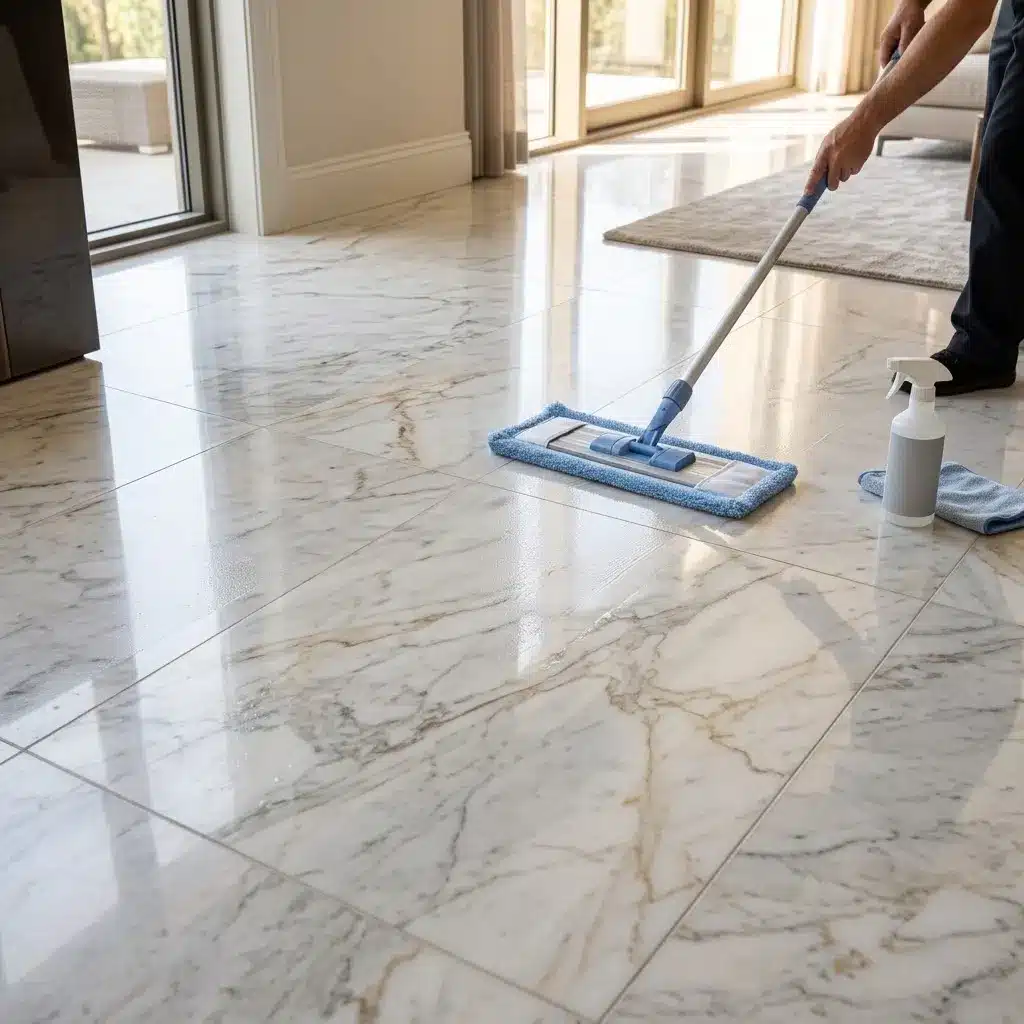
Ceramic vs. Natural Stone: What Should You Avoid?
The most important cleaning difference is the level of chemical sensitivity. Ceramic tile with a glazed surface can tolerate a wider range of tile-safe cleaning products, while natural stone often requires specially formulated solutions.
Here are common mistakes to avoid:
- Using vinegar on sensitive stone: Acidic cleaners can etch marble, limestone, and other acid-sensitive surfaces.
- Applying harsh chemicals: Strong products may damage finishes, grout, or protective treatments.
- Using abrasive tools: Rough pads and stiff brushes can scratch polished stone and wear grout.
- Leaving dirty water behind: Residue can settle into grout lines and make floors look dull.
- Ignoring spills: Certain liquids can stain porous stone or discolor grout if left untreated.
- Using too much water: Excess moisture can affect grout and may penetrate porous flooring materials.
When in doubt, test a suitable product in an inconspicuous area and follow the flooring manufacturer’s care instructions.
Why Professional Tile and Grout Cleaning Makes a Difference
Routine sweeping and mopping help control surface dirt, but they may not remove deeply embedded grime from grout lines and textured tile surfaces. Over time, accumulated soil can make floors look darker and less uniform, particularly in kitchens, bathrooms, and high-traffic areas.
Professional tile and grout cleaning uses specialized equipment and cleaning solutions to loosen embedded dirt and extract it from the floor. The cleaning method should be selected according to the tile material, grout condition, and level of buildup.
Best Brothers Carpet Cleaning provides tile and grout cleaning for ceramic, stone, and marble floors. The company highlights professional equipment and cleaning solutions designed to lift grime and brighten grout without relying on harsh chemicals. Its broader floor-cleaning approach emphasizes inspecting surfaces, selecting suitable methods, and removing loosened dirt and moisture through extraction.
For homeowners with natural stone, professional assessment is particularly valuable. Technicians can consider the type of stone and its condition before choosing a cleaning approach, helping reduce the risk of damage from unsuitable products or excessive scrubbing.
An Illustrative Example: Restoring Tile Floors in an Oakley Home
Imagine an Oakley homeowner with ceramic tile in the kitchen and marble flooring in a bathroom. After months of daily use, the kitchen grout has become dark, while the marble has developed dull-looking areas.
The homeowner initially considers using the same strong household cleaner on both floors. However, after learning that acidic products can damage marble, the homeowner decides to use separate cleaning methods.
The ceramic floor receives an appropriate tile-cleaning treatment, while the marble is assessed for a stone-safe cleaning solution. The grout receives additional attention to remove accumulated dirt.
This illustrative situation demonstrates why identifying flooring materials before cleaning is important. A method that works for one surface should not automatically be used on another.
How Often Should You Clean Ceramic and Natural Stone Floors?
Cleaning frequency depends on household activity, the type of flooring, and how quickly dirt accumulates. Kitchens, bathrooms, entryways, and rooms used by children or pets generally need more frequent attention.
For everyday maintenance, sweep or vacuum regularly and clean spills as soon as possible. Damp-mop ceramic floors with a suitable cleaner when needed. For natural stone, use a stone-safe product and avoid excessive moisture.
Professional cleaning can help when grout becomes noticeably discolored, dirt remains after routine mopping, or the floor develops persistent residue. An inspection can help determine the appropriate cleaning method and whether additional grout or stone care is needed.
Frequently Asked Questions
Is ceramic tile easier to clean than natural stone?
Generally, yes. Glazed ceramic tile is relatively resistant to stains and moisture, while many natural stone surfaces are porous or chemically sensitive. However, grout on both types of flooring still requires regular care.
Can I use vinegar to clean natural stone floors?
Vinegar should not be used on acid-sensitive stone such as marble and limestone because it can cause etching and dull the surface. Use a pH-neutral cleaner specifically formulated for the type of stone.
Does natural stone tile need sealing?
Some natural stone floors benefit from sealing, but requirements vary by stone type, finish, and existing treatment. Follow the stone manufacturer’s recommendations or consult a qualified flooring professional.
Why does my tile look clean but the grout remains dark?
Grout is often more porous than tile and can absorb grease, dirt, and moisture. Routine mopping may not remove embedded buildup, so professional grout cleaning may be necessary.
Can professional cleaners clean both ceramic and natural stone?
Yes, professional tile and grout cleaning providers may service both materials. The cleaning process and products should be selected according to the specific flooring type to help protect the surface.
Keep Your Floors Looking Their Best with Best Brothers Carpet Cleaning
Ceramic and natural stone floors can remain attractive for years when cleaned with the right techniques. Regular maintenance helps control everyday dirt, while professional cleaning can address embedded grime that ordinary mopping cannot remove.
Best Brothers Carpet Cleaning provides tile and grout cleaning for ceramic, stone, and marble floors in Oakley and surrounding service areas. Its team uses professional equipment and cleaning solutions selected to remove buildup while caring for different flooring materials.
If your tile looks dull or your grout has become discolored, call (925) 238-5158 to request a free estimate and discuss professional floor-cleaning options.